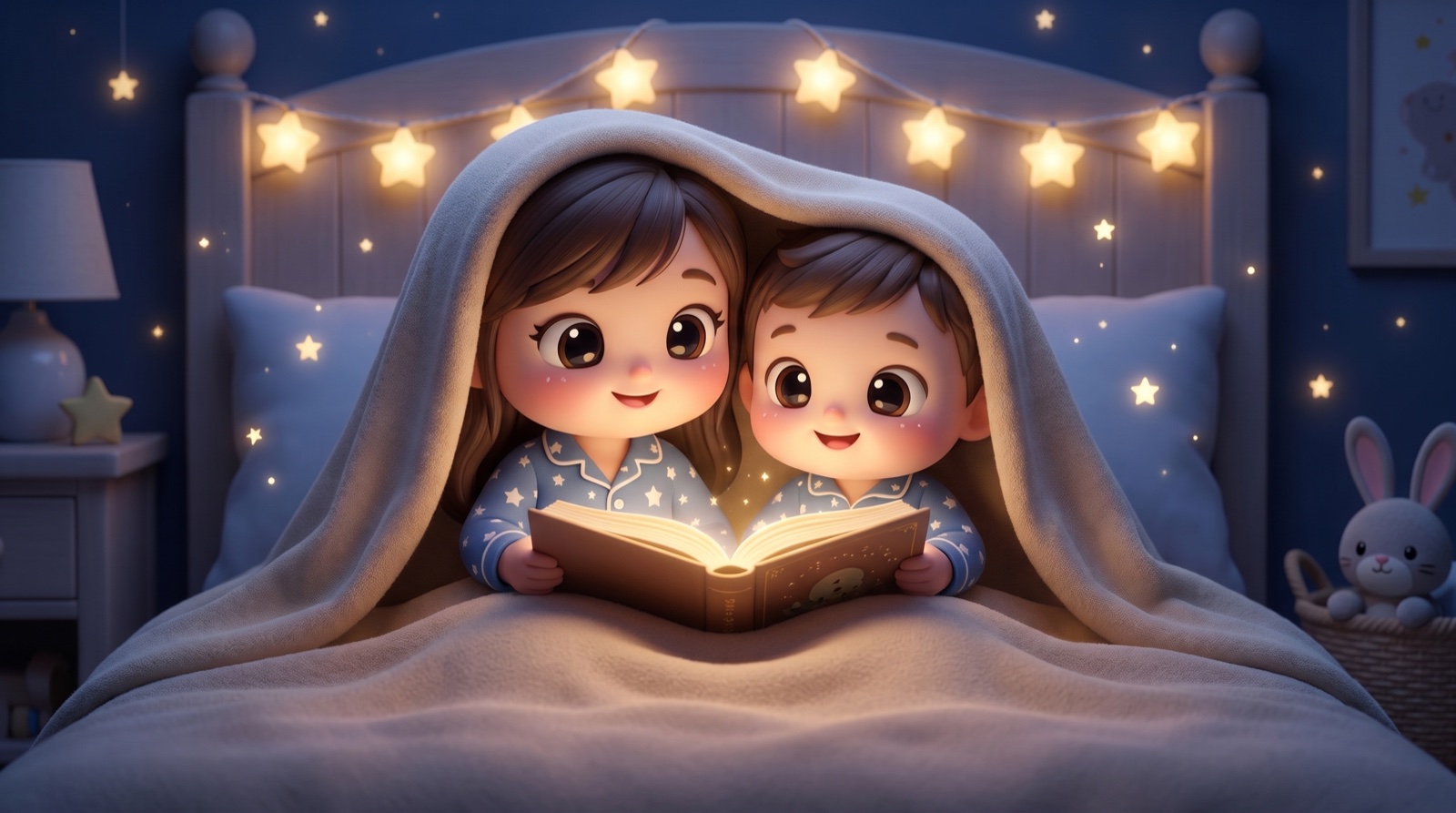
The Two-Audience Problem
The four-year-old wants the puppy story. The seven-year-old declares puppy stories are for babies. It is 8:03 pm and you are hosting a focus group. Sibling bedtime asks one story to please two very different audiences — and somehow end with both of them asleep.
Why Shared Stories Are Worth It
It is tempting to split bedtimes entirely, and sometimes that is right. But a shared story ritual gives siblings something rare: a nightly experience that belongs to both of them. Shared rituals are the raw material of sibling closeness — the inside jokes, the "remember our story about the pancake mayor" — and they turn bedtime from parallel negotiations into one cozy event.
Tricks for Mixed Ages
- Two heroes, one quest — give each child a role: the big one reads the map, the little one talks to the animals
- Layer the story — simple plot for the younger, sly jokes and details for the older
- Alternate picking nights — Monday is Mia's choice, Tuesday is Ben's; the calendar absorbs the argument
- Let the older one help tell it — narrating a part makes "baby stories" suddenly dignified
- Keep one shared ending — whatever the adventure, it ends with both heroes home, safe, and sleepy
The Magic of Both Names
Here is what changes everything for sibling stories: when both children are in it. Not a story about a generic brother and sister — a story where Mia and Ben themselves ride the cloud whale together. Nobody argues about whose story it is when the answer is: it is ours.
Children who share a story stop competing for it and start belonging to it. The nightly fight over which video to watch quietly becomes "can we watch our story?"
Create Your Family's Story
Bedtime Stories by Luma lets you put more than one hero in the tale — brothers, sisters, cousins, even the family dog as the loyal sidekick. One animated adventure, everyone's name in lights, and a bedtime that ends with two dreamers instead of two negotiators.