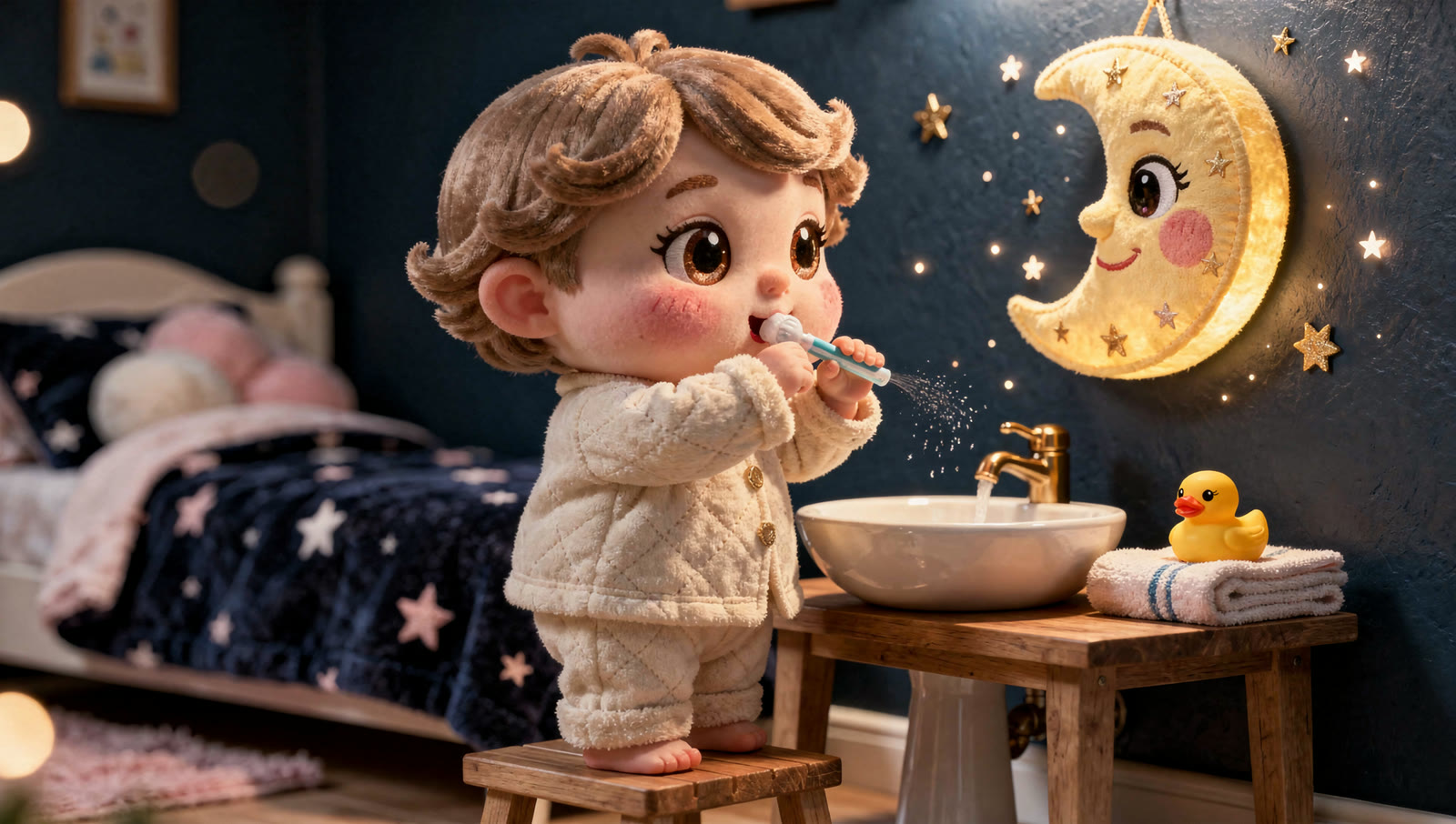
Ask any pediatric sleep specialist what single change helps young children sleep better, and you'll hear the same unglamorous answer: a consistent bedtime routine. Not a gadget, not a supplement — the same calm steps, in the same order, at roughly the same time, every night.
Here's why such a simple thing works so well, what it actually does for your child (and for you), and how to build one that survives real life.
Why routines work: the science in plain words
Two systems decide when your child falls asleep. Sleep pressure builds the longer they're awake, and their body clock releases melatonin when it believes night has come. A routine doesn't create sleep — it aligns these systems and removes the obstacles:
- Predictable steps lower stress hormones. Uncertainty is arousing; knowing what comes next is calming.
- Repeated cues — dim light, warm bath, quiet voice — become conditioned signals. After a few weeks, the routine itself starts making your child drowsy, the way a favorite chair makes you want coffee.
- A fixed order removes negotiation. The routine says what happens next, so you don't have to.
The seven benefits
- Faster sleep onset — children with consistent routines typically fall asleep noticeably faster. The wind-down does the work bedtime arguments never could.
- Longer, less fragmented nights — a settled brain at lights-out carries into fewer wake-ups. Routine at 7 p.m. pays off at 2 a.m.
- Fewer battles and callbacks — when the sequence is the boss, "one more show" stops being a negotiation with you. Most families see resistance drop within a week or two.
- Emotional regulation practice — the routine is a nightly rehearsal of moving from excited to calm. That down-shifting skill transfers far beyond bedtime.
- Language and bonding time — the story step is many families' richest conversation of the day. Shared stories build vocabulary, attention span, and the unshakeable knowledge that they get you, undivided, every night. (Stories where your child is the hero do extra work here — here's why.)
- Confidence and independence — a child who knows the steps starts doing the steps: fetching the book, climbing into bed, turning off the lamp. Small ownership, big pride.
- Your evening back — this benefit is allowed to matter. A predictable 20-minute routine that ends in actual sleep returns hours of adult evening per week, and calmer parents make calmer bedtimes. It compounds.
A sample 20-minute routine
The exact steps matter less than their order and repetition. A solid template:
- Wind-down warning (5 minutes before): "After this tower, it's bath time." Transitions go down easier with a runway.
- Bath or wash-up — warm water, then the natural body-temperature drop afterward actually helps trigger sleepiness.
- Pajamas and teeth — same order every night.
- Lights low, voices low — the whole house shifts, not just the child.
- Story — in bed, one or two, agreed in advance. A calm, familiar story beats a thrilling new one at this hour.
- Same goodnight phrase — "Night night, see you in the morning." The phrase becomes a sleep cue in itself.
Common pitfalls
- Drifting start times. A routine at 7:00 one night and 8:40 the next isn't a routine — the body clock never locks in. Aim for a 30-minute window.
- Stimulating "last steps". Wrestling, tickling, or a fast-paced cartoon right before lights out undoes the wind-down. Save the energy burn for after school, not after bath.
- Open-ended negotiations. "One more story" works once, then becomes the nightly toll. Set the count in advance and let the routine be the bad guy.
- Abandoning ship after disruptions. Travel, illness, holidays — routines break. That's fine. Children re-lock onto a familiar routine within a few nights; just restart it, don't rebuild it.
Where a personalized story fits
The story step is the emotional heart of the routine — and the one step children will happily pull the routine toward. A story starring your own child gives them a reason to race through teeth-brushing: their own adventure is waiting.
That's exactly the slot Bedtime Stories by Luma was built for: a 30-second animated story where your child is the hero — watched together at step five, followed by the same goodnight phrase and lights out. Story text and artwork are free to preview and edit, so the ritual can start tonight even before you decide on the video.
Frequently asked questions
What's the right bedtime?
Younger children generally need earlier bedtimes than modern family schedules default to — most toddlers and preschoolers do best with lights out between 7:00 and 8:30 p.m. Watch your child, not the clock: overtired kids get more wired, not sleepier.
How long should the routine be?
Twenty to thirty minutes from bath to lights out is the sweet spot. Under ten feels abrupt; over forty-five invites drift and negotiations.
We broke the routine for a week. Start over?
Just resume it. Familiar routines re-establish far faster than new ones form. Expect two or three bumpy nights, not a month.