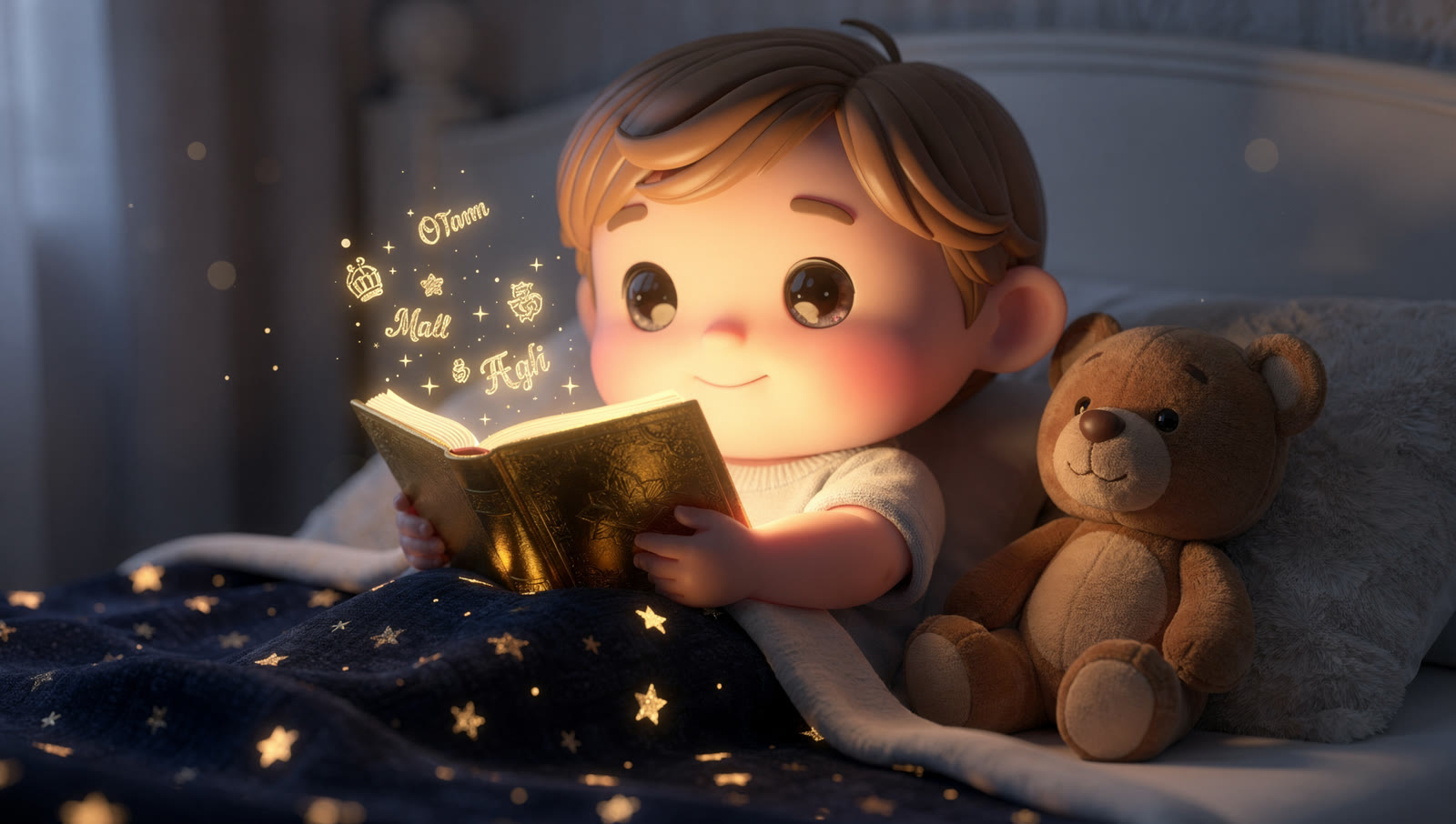
Every parent knows the moment. You're two pages into yet another dinosaur book, your toddler is fidgeting — and then a story mentions a child with their name. Suddenly the wiggling stops. Eyes wide. Full attention.
That reaction isn't a coincidence, and it isn't just cuteness. It's one of the most reliable findings about how human attention works — and you can use it, gently, to turn bedtime from a nightly negotiation into the part of the day your child asks for.
Why hearing their own name is different
Psychologists call it the self-reference effect: information connected to ourselves gets deeper processing and stickier memory than information about anyone else. Adults show it in lab studies; children show it every time a story character shares their name, their curly hair, or their love of fire trucks.
For a small child, a personalized story does three quiet but powerful things:
- It signals safety. The story world contains familiar things — their name, their face, their bunny. Familiarity is soothing, and soothing is exactly what bedtime needs.
- It builds identity. Around ages 2–5, children are constructing a sense of "who I am." Seeing themselves as the kind, brave hero of a story is identity-building material, delivered in the softest possible format.
- It earns attention without stimulation. You don't need flashing colors or frantic pacing to hold a child's focus when the story is about them. Calm and captivating can coexist.
What personalization actually changes at bedtime
Parents who switch to personalized stories usually notice the same pattern: the resistance melts first, then the ritual strengthens.
- Fewer bedtime battles — "story about YOU" is an invitation, not a command. Children walk toward it.
- Smoother transitions — the story becomes a predictable bridge between bright, busy evening and dark, quiet night. (A consistent routine matters more than any single trick — we wrote about why routines work separately.)
- Repetition on demand — children ask for the same personalized story again and again. That repetition is not boring to them; it's rehearsal of a comforting message: you are brave, you are loved, you can sleep now.
- A keepsake — unlike a library book, a story starring your child at age three stays precious at age thirteen.
What makes a personalized story actually good
Not all personalization is equal. A name pasted into a generic template is better than nothing — but the stories children love most share a few traits:
- The hero looks like them, not just shares a name. Visual recognition lands harder than text for pre-readers.
- A gentle arc — a small worry, a brave little step, a warm resolution. No real peril, no cliffhangers at 8 p.m.
- Sleep-shaped pacing — the story should slow down as it goes, ending somewhere soft: stars, blankets, a goodnight.
- A theme that touches their real life — first day of school, a new sibling, learning to share. Stories are how small children rehearse life safely.
From name-swap books to starring in their own film
Personalization has come a long way. Printed name-swap books were the first generation. Today, tools like Bedtime Stories by Luma take it to the level children respond to most: from a single photo, Luma draws your child as an adorable soft-3D storybook hero, writes an original story around your chosen theme, illustrates it — and then turns it into a 30-second animated video with warm narration, their name spoken aloud, and a gentle lullaby underneath.
The story text and all the artwork previews are free and unlimited — you read, tweak, and approve everything before any payment. The video can be narrated in 11 languages, from English and Spanish to Japanese. (Curious how the technology works? Here's the full behind-the-scenes.)
Making it a ritual, not a treat
A personalized story works best woven into the same slot every night:
- Bath, pajamas, teeth — the physical wind-down.
- Dim the lights. Same corner, same blanket.
- The story — read, watched together, or listened to.
- A consistent goodnight phrase. Lights out.
Keep the story the second-to-last step, not the last: you want the final beat of the night to be your voice and the dark, so the story becomes the runway, not the destination.
Frequently asked questions
What age do personalized stories work best for?
The sweet spot is roughly 18 months to 7 years. Under 18 months, the routine and your voice matter more than the plot. Past 7, kids still love being the hero — the themes just need to grow with them.
Isn't a story video just more screen time?
Fair question — and worth answering honestly rather than defensively. A fixed 30-second, slow-paced, watch-together video is a very different thing from open-ended tablet time. We unpacked the research and our design choices in Screen Time Before Bed.
How often should the story change?
Follow the child. Most toddlers want the same story for weeks — that's healthy. Introduce a new one when their life introduces a new theme: a move, a milestone, a worry.