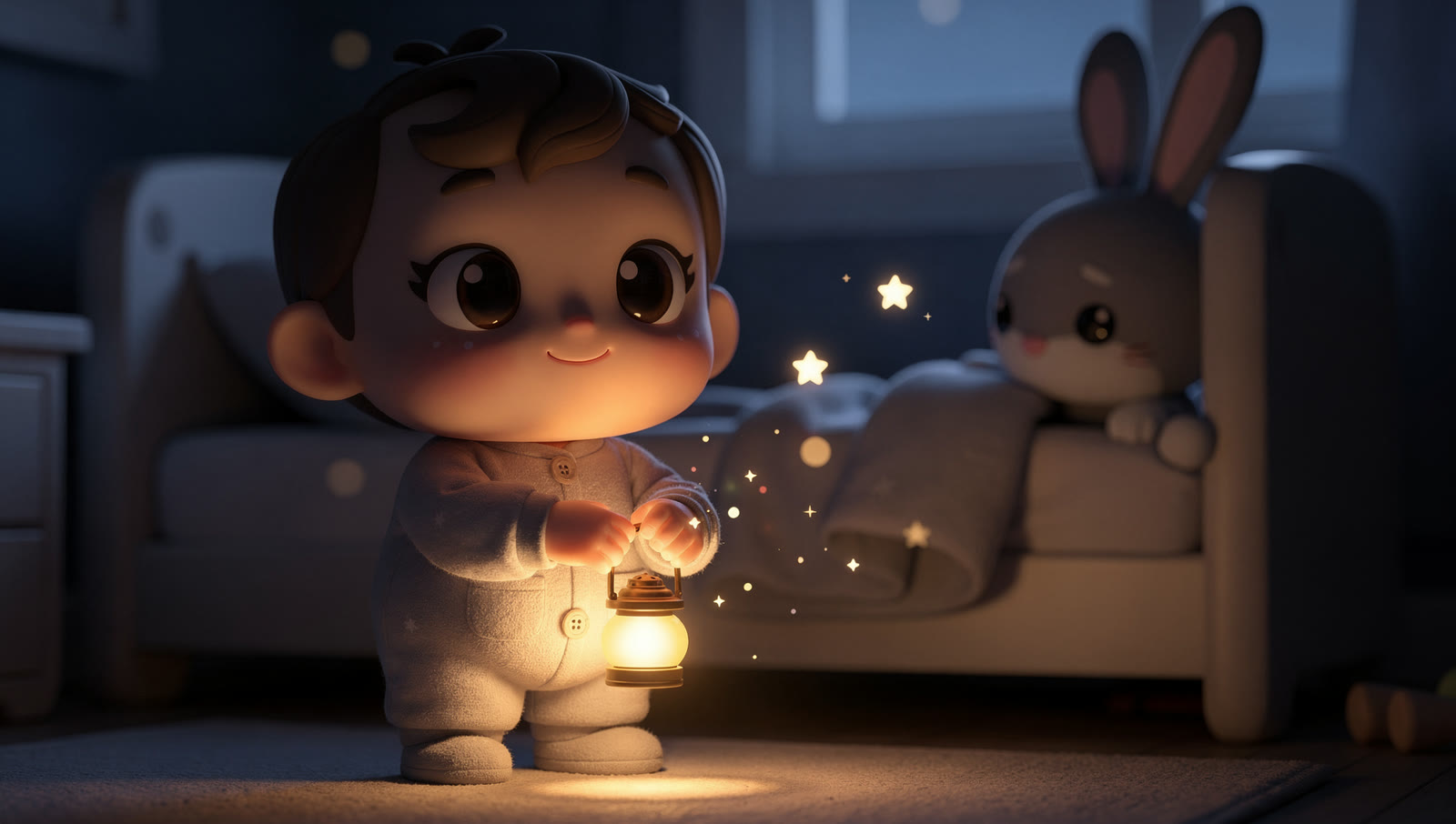
It often starts around the second or third birthday. The same child who slept peacefully in a pitch-dark room suddenly needs the door open, then the hallway light, then you, sitting right there, indefinitely. The dark has become scary — seemingly overnight.
Here's the reassuring truth, and what actually helps.
Why the fear appears (right on schedule)
Fear of the dark shows up when it does for a developmental reason: imagination arrives before reasoning. Around age two to three, children become able to picture things that aren't there — that's a magnificent cognitive leap. But the ability to tell themselves "that shadow is just my bathrobe" comes years later. In between, the imagination fills dark rooms and the reasoning can't yet empty them.
In other words: a toddler afraid of the dark isn't regressing. Their mind just grew a new power faster than its brakes.
What doesn't help (though we've all tried)
- Logic lectures. "There's nothing there, see?" — you're asking the reasoning system to win a fight it isn't old enough to enter.
- Dismissing. "Don't be silly, big kids aren't scared." The fear stays; now it's also lonely.
- Mockery or pressure. Fear plus shame doesn't equal courage; it equals hidden fear.
- Total surrender. Moving the child permanently into your bed or leaving every light blazing tells them the dark really is dangerous.
The goal is the middle path: take the feeling seriously, not the monster.
What helps
- Name and normalize. "You're feeling scared of the dark. Lots of kids feel that at your age. I used to, too." Being understood is the first safety.
- Dim gradually, don't switch. A warm, dim night light (soft amber rather than bright blue-white) as a stepping stone. Each week, a little dimmer.
- Give them a job. Fear shrinks when children act instead of hide: a "guard teddy" to tuck in, a special blanket that "keeps the cozy in."
- Keep the routine sacred. Predictability is the antidote to a mind primed for surprises. The same steps, same order, every night — a solid routine is half the treatment.
- Daylight rehearsals. Play in dim rooms during the day — flashlight hide-and-seek, shadow puppets. The dark becomes familiar territory on the child's terms.
The story reframe: from victim to hero
Here's the tool parents underuse: stories are how small children rehearse life safely. A child listening to a story about darkness isn't just entertained — they're practicing, from the safety of your lap.
The reframe that works is never "there's nothing in the dark." It's: the dark is gentle, and you are brave. The dark as the sky giving everyone a hug. Shadows as shy friends. Stars as night-lights the sky turns on just for them.
And the strongest version of that story is the one where the brave child is them — their name, their face, their little victory over the evening dark. Self-referenced stories land deeper than any generic tale (here's the psychology); a child who has watched themselves befriend the dark carries that image to bed.
That's exactly what Bedtime Stories by Luma builds: from one photo, a 30-second animated story where your child gently discovers the dark is a friend — theme options like "The Shadow Friend" were written for precisely this fear. The story text is free to preview and edit, so you can tune every word to your child's particular worry.
When to check with a professional
Fear of the dark is normal; suffering isn't. Talk to your pediatrician if the fear is intense past age six or so, comes with night terrors or persistent nightmares, follows a frightening event, or is wrecking sleep for the whole family week after week. Getting guidance early is wisdom, not defeat.
Frequently asked questions
Night light: yes or no?
Yes, if it helps — choose warm/amber and dim, placed low. The goal is a stepping stone toward comfortable darkness, not a permanently lit room.
Should we check under the bed "for monsters"?
Once, matter-of-factly, if the child asks — refusal can read as "too scary to look." But don't build a nightly inspection ritual; that tells the fear it has an appointment.
How long does this phase last?
For most children the intense phase lasts months, not years, fading as reasoning catches up with imagination — typically well before age six. Handled with warmth, it leaves behind a child who knows their feelings get taken seriously.